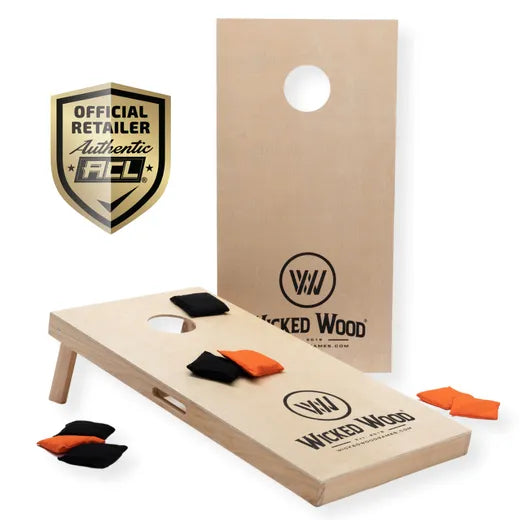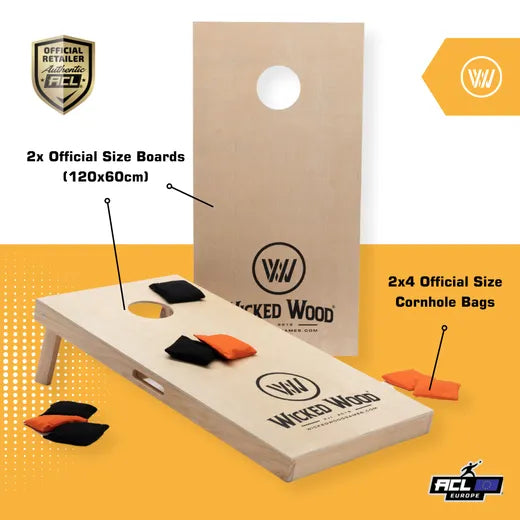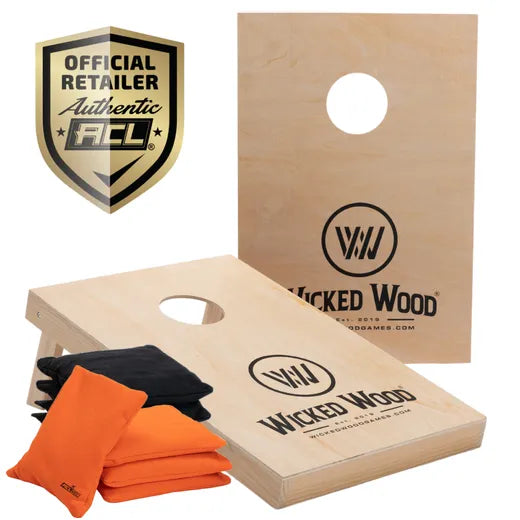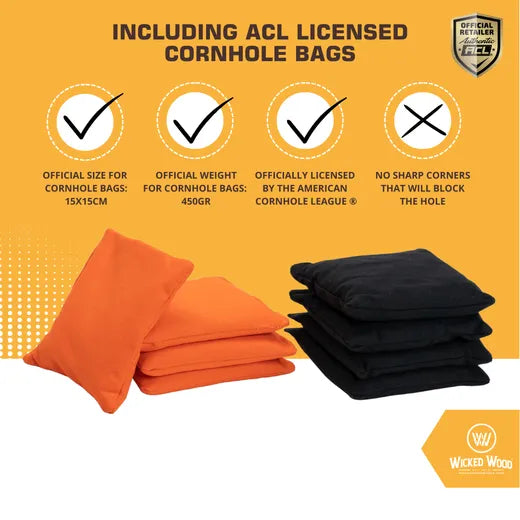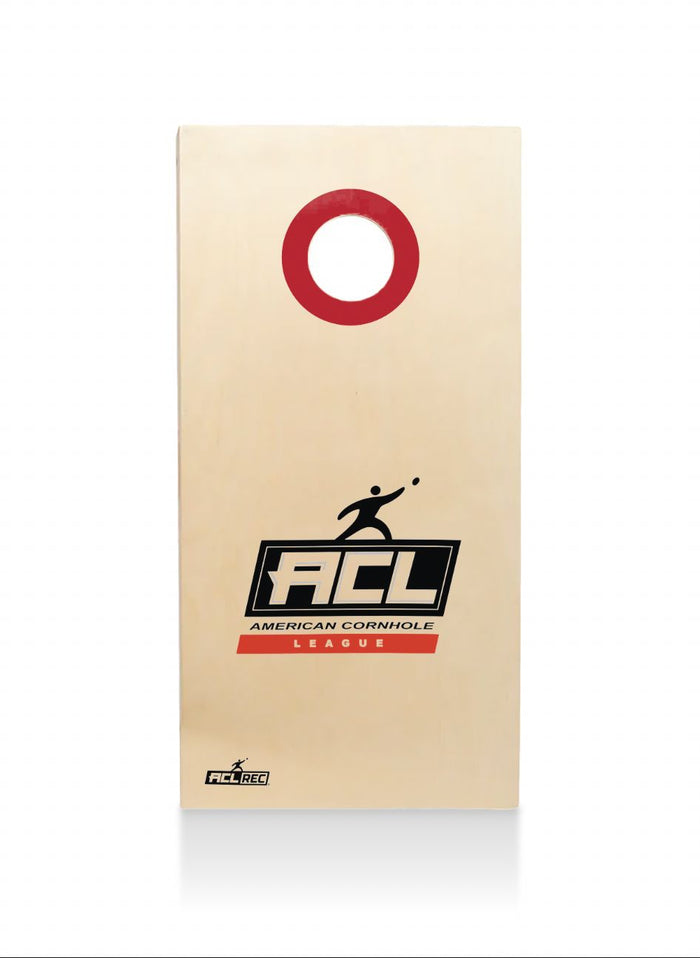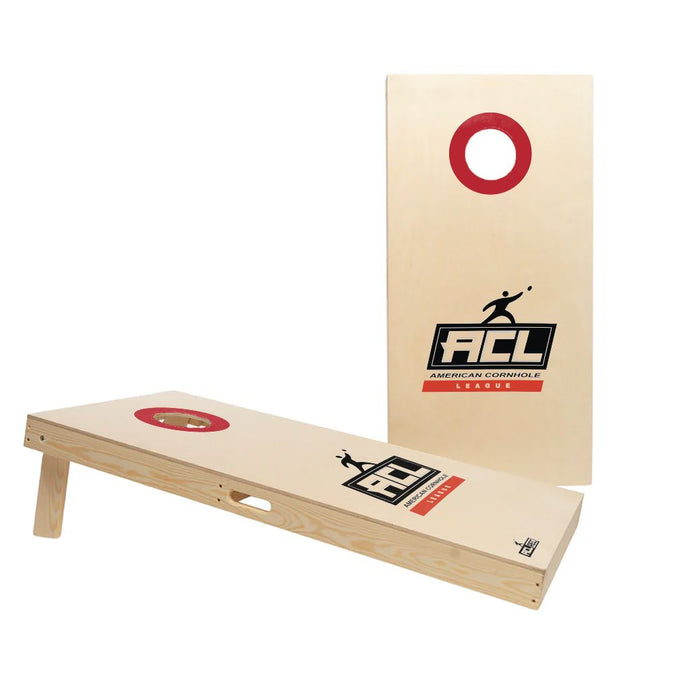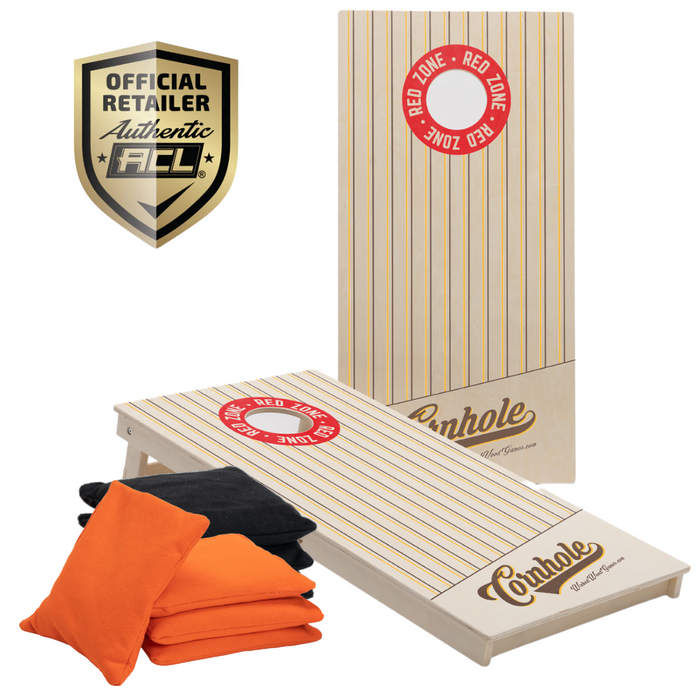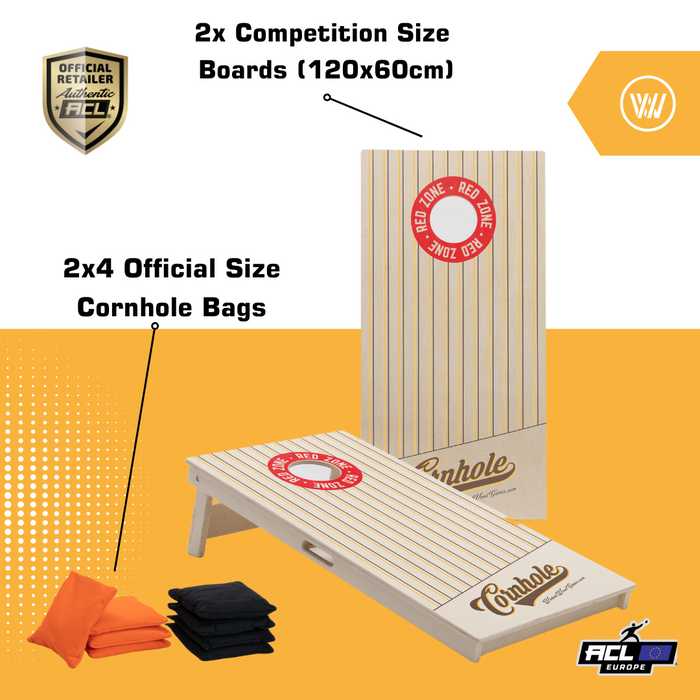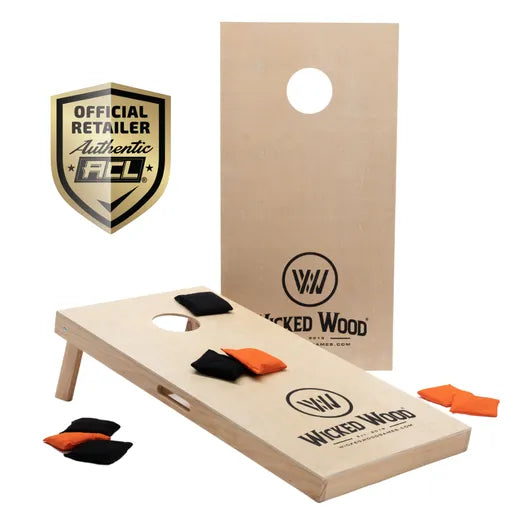
Cornhole has grown from a fun backyard game into a competitive sport, with professional equipment playing a crucial role. In this guide we take a look at professional cornhole boards, focusing on the standards set by the American Cornhole League (ACL) and what makes these boards so special. Whether you are a professional player or just starting out, understanding professional cornhole boards can improve your game.
Key insights
- ACL-approved dimensions and construction are essential for tournaments
- Premium wood, usually Baltic birch plywood, provides durability and excellent performance
- A specialised finish is crucial for optimal bag slide and consistent play
- Professional boards are thicker (15–18 mm)
- ACL licences guarantee that the boards meet strict competitive standards
- Good maintenance is essential for durability and consistent performance
- Understanding the difference between ACL COMP and ACL PRO boards is important for serious players
ACL standards: The rules for professional cornhole
The American Cornhole League (ACL) is the leading organisation for competitive cornhole in the United States. With more than 25,000 tournaments per year and over 100,000 players, the ACL has established strict rules for professional cornhole boards. These rules are based on extensive testing and feedback from top players to ensure fair and enjoyable play. The influence of the ACL reaches beyond the US and sets standards for cornhole equipment and rules of play around the world.


ACL boards are divided into three categories:
- Recreational (REC): For casual use and beginners. Not suitable for official tournaments.
- Competitive (COMP): Suitable for local tournaments and serious players.
- Professional (PRO): The best boards, used in national and international competitions.
What makes professional cornhole boards special?
1. Dimensions and construction
Professional cornhole boards must meet specific dimensions:
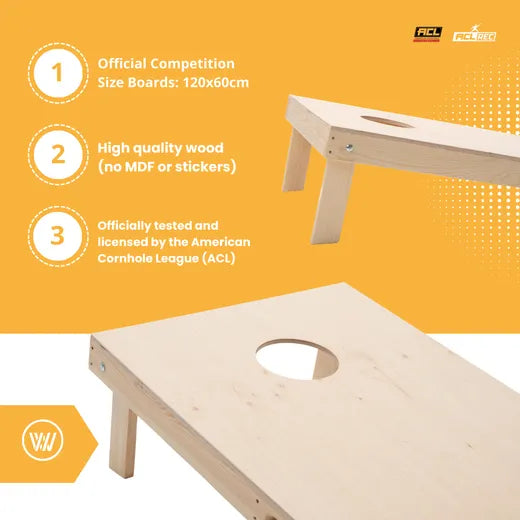
- Length: 120–121.9 cm
- Width: 59.7–61 cm
- Hole diameter: 15.2 cm
- Front edge height: 7.6–10.2 cm
- Back edge height: 30.5 cm
These boards are made from sturdy materials such as wood and have a high-quality playing surface. The frames are solid and do not flex during play. The playing surface must be perfectly flat so that the bags slide smoothly.
2. Wood quality and finish
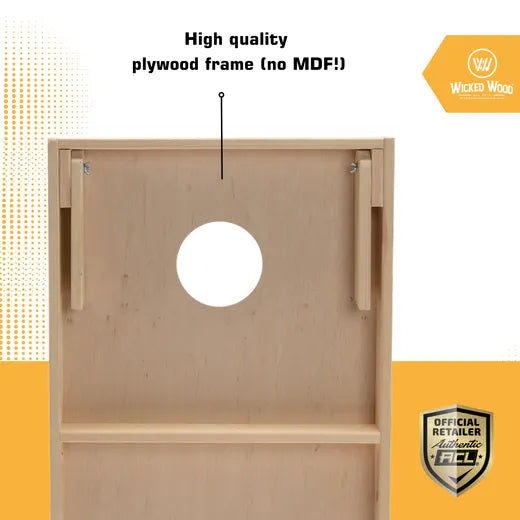
Baltic birch plywood is a popular choice for professional cornhole boards. This wood is strong, durable and has a very smooth surface, ideal for competitive play. It consists of thin layers of wood that are firmly glued together, providing extra strength and reducing the chance of warping.
The finish of the board is also very important. A special coating ensures optimal sliding of the bags. The finish must be smooth enough for easy movement, but not so smooth that the bags slide off.
3. Thickness of the board
The thickness of the board is a distinguishing factor:
- ACL REC boards: 10–12–15 mm, suitable for recreational use.
- ACL COMP boards: 15 mm, ideal for serious players and official tournaments.
- ACL PRO boards: 18 mm, designed for top-level competitions.
Thicker boards are more stable and vibrate less when the bags land on them, which is important during matches.
ACL COMP vs ACL PRO: What is the difference?
| Feature | ACL COMP | ACL PRO |
|---|---|---|
| Thickness of the board | 15 mm | 18 mm |
| Weight | Approximately 11.3 kg | Approximately 14 kg |
| Use in tournaments | Up to ACL Europe Tier 2 | All levels, including major competitions |
| Stability | Very good | Excellent |
| Price | 300–500 | 500+ |
| Best for | Serious players, local tournaments | Professional players, major competitions |
Why ACL licences are important
An ACL licence means that the board complies with all the ACL’s strict rules regarding dimensions, materials and quality. Only boards that pass extensive tests receive this licence. This guarantees a consistent playing experience and quality.
Maintaining your professional cornhole board
Good maintenance extends the lifespan of your board and ensures consistent performance. Here are some tips:
- Store the board in a dry place to prevent warping.
- Clean regularly with a soft cloth. Use a slightly damp cloth for stubborn dirt and dry immediately.
- Avoid extreme temperatures and direct sunlight.
- Check and tighten screws and bolts regularly.
- Inspect the playing surface for damage.
- Use protective covers during transport to prevent scratches.
Conclusion: Getting better at cornhole
Professional cornhole boards provide the best equipment to improve your game. They are perfect for serious players who want to develop their technique and enjoy the highest quality. Combine this with plenty of practice and you will continue to grow as a player. Have fun and good luck with cornhole!