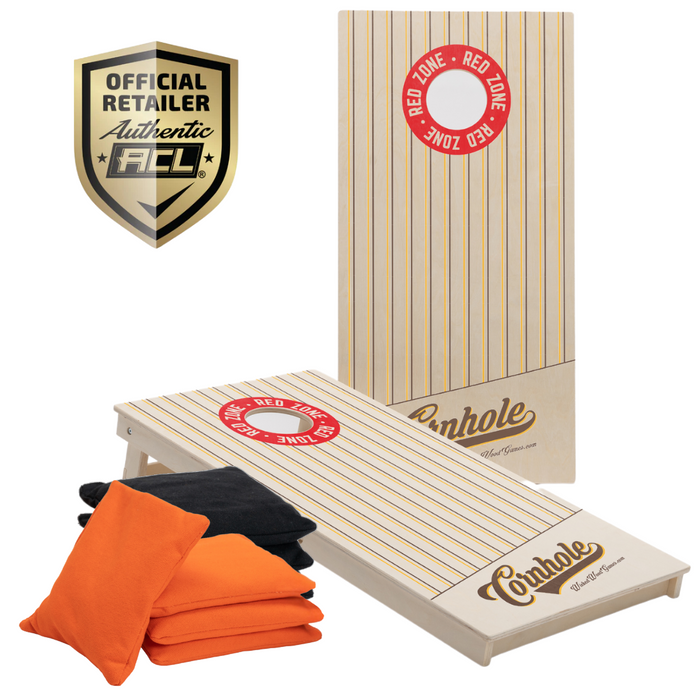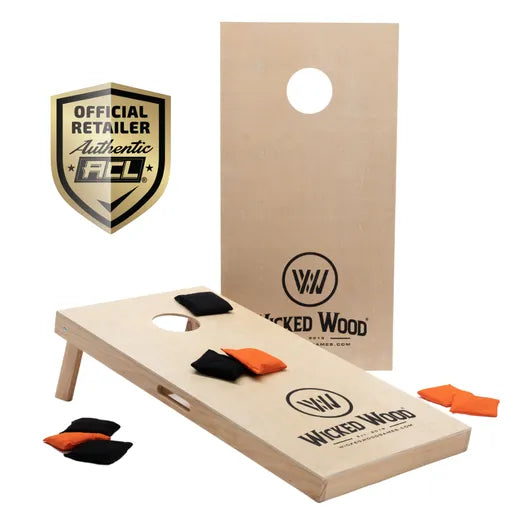
Everything about maintaining Cornhole boards and bags
A well-maintained Cornhole set ensures better performance, a longer lifespan and a consistent playing experience. Whether you play casually in the garden, train at official distance or take part in tournaments, clean and properly maintained equipment is essential.
In this guide we explain how to best care for your Cornhole boards and bags. All tips are based on guidelines from the professional Cornhole world, including the standards used by organizations such as the ACL.
Want to learn more about Cornhole itself? Then first check our complete Cornhole explanation.
Maintaining Cornhole Boards
1. Cleaning the surface
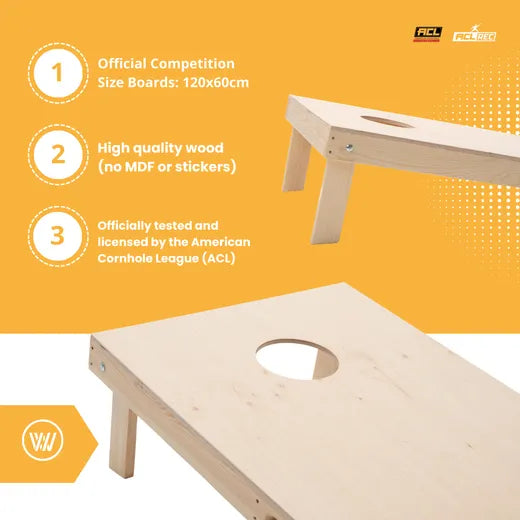
Cornhole boards are usually made of lacquered wood. Dust, sand, mud or greasy fingers can cause bags to slide faster or to get blocked instead. Therefore, regularly clean the surface:
- Quickly wipe down with a slightly damp cloth
- Do NOT use aggressive cleaning agents
- Remove sand and soil immediately to prevent scratches
- Optionally use a soft microfiber cloth to restore shine
The balance between grip and slide is crucial for techniques such as the slide shot, block shots and push bags. A clean board provides a predictable playing experience.
2. Keep the board dry
Wood and moisture are not friends. Water can cause the wood to expand, damage the varnish and reduce playing quality.
- Never store boards outside
- Cover them immediately in case of rain
- Let them dry in a dry room if they are damp
- Avoid playing on wet grass
3. Protect the varnish layer
The varnish layer determines the sliding speed of cornhole bags. Professional players always train on boards with a consistent lacquer finish.
Maintenance tips:
- Check annually for wear
- Have boards revarnished when the finish visibly becomes dull
- Only use lacquer with a fine wood structure, not a coarse roller texture
- Do not sand with coarse sandpaper — this changes the sliding speed
Our cornhole sets are finished according to official tournament standards, so that the bags slide naturally without shooting through too quickly.
4. Prevent scratches
Scratches can affect the sliding behavior of the bags.
- Never drag over asphalt or stones
- Use protective covers during transport
- Do not place boards on sharp edges or screws
5. Storage & transport
Boards stay beautiful the longest if you store them safely:
- Store in a dry, enclosed space
- Place them upright, preferably not stacked flat
- Avoid extreme heat
Maintaining Cornhole Bags
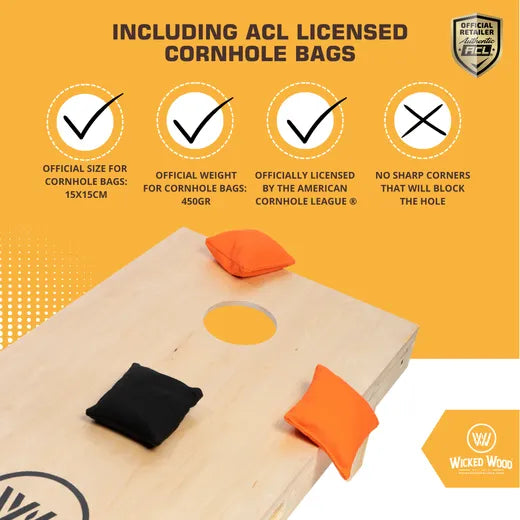
Cornhole bags vary in material, texture and filling. Some have a “sticky” side, others a “slick” side. Factory residue, dust or moisture can temporarily affect their properties.
You can find everything about types of bags in our Cornhole bags guide.
1. Keep bags dry
- Never store bags in damp bags
- Let bags dry if they have become wet
- Do not play on wet grass — fabric bags absorb water
2. Remove dust and dirt
Use a dry brush or microfiber cloth. Do not soak, wash or wring — this can cause the filling to clump.
3. Never put bags in the washing machine
Washing machines damage seams, filling and texture. Even professional ACL bags must never be washed.
4. Take playing time (“break-in”) into account
New bags often play differently from broken-in bags. With use, the fabric softens and the sliding speed changes.
Tip: let bags “break in” before tournaments.
5. Recognize wear
- Seams coming loose
- Thin fabric spots at pressure points
- Denting or clumping in the filling
Are bags worn out too far? Then check out our range of professional Cornhole bags or ACL-approved bags.
Influence of Climate, Surface and Weather Conditions
1. Humidity
Moisture makes boards grippier, causing bags to stop sooner. Dryness makes surfaces faster, ideal for slide shots.
2. Temperature
Cold temperatures stiffen fabrics and affect sliding speed. Warmer climates make the fabric more supple.
3. Surface
Preferably play on a flat, clean surface. Asphalt, sand and gravel damage wooden frames.
Pro Maintenance Tips
- Use a soft cloth to clean boards before every event
- Clean bags after outdoor sessions
- Always play on dry ground
- Store sets in protective covers
- Regularly check boards for varnish wear
- Play only with quality bags for consistent technique
- Let bags and boards acclimatize to room temperature before tournaments
Do you play tournaments regularly? Then check our page Cornhole tournaments with official ACL Europe events.
When should you replace equipment?
Boards
- Wood warps
- Varnish layer is damaged
- Deep scratches disrupt the game
Bags
- Seams come loose
- Filling clumps
- Fabric is thin or damaged
Professional players often replace bags every season. You can find our selection of ACL products here:
Professional Cornhole Bags
FAQ – Cornhole Maintenance
Do I need to varnish my Cornhole board?
Yes, if the varnish layer is visibly wearing. Use a fine varnish layer to keep the sliding of the bags consistent with official standards.
Can I wash Cornhole bags?
No. Water and washing machines damage the fabric structure and filling. Clean only with a dry brush or cloth.
How do I store my Cornhole equipment?
Dry, indoors and protected from scratches and moisture. Use transport covers and always store boards upright.
Conclusion
Good maintenance makes an enormous difference in playing quality, technique control and the lifespan of your equipment. Dry storage, regular cleaning and protection against wear are the basics. Anyone who plays tournaments knows: perfect boards and broken-in bags decide the match.
Ready to take smart care and play better?
Check out our cornhole sets and professional bags for optimal training and performance.
FAQ – Cornhole Maintenance
Do I need to varnish my Cornhole board?
Yes, when the varnish layer visibly wears, becomes dull or feels rougher. A smooth, finely varnished surface ensures a consistent sliding speed of Cornhole bags — as with official tournament boards. Always use a high-quality varnish and avoid a coarse roller texture.
Can I wash Cornhole bags?
No. Cornhole bags must never be washed or submerged in water. This damages seams, texture and filling. Clean bags only with a dry brush or soft cloth, and let them dry thoroughly when they have become damp.
How do I store my Cornhole equipment?
Always store boards and bags indoors, dry and dust-free. Place boards upright, avoid damp rooms and use transport or protective covers during transport. Before storing, check that bags are completely dry.
How often should I maintain my Cornhole equipment?
For recreational use: a quick clean after playing is sufficient. For intensive or competitive use: check boards and bags weekly for moisture, wear, varnish quality and dust residues. Professional players clean before and after every training session.
Is there a difference between recreational and professional Cornhole maintenance?
Yes. Recreational players mainly focus on keeping things dry and clean. Competitive players pay extra attention to sliding speed, texture, micro-wear, filling control and varnish condition. At tournaments, even a minimal difference in surface or bag structure can decide the outcome.
Can playing outdoors shorten the lifespan of my Cornhole equipment?
Yes. Playing outdoors means a higher chance of moisture, sand, mud and UV light. Wet grass, rain or dew can saturate bags and damage the varnish layer. Preferably use boards on dry ground and store them immediately after play.
Can good maintenance completely prevent wear?
No, but it greatly slows down wear. Cornhole boards and bags are consumable items; intensive use will eventually always cause wear to fabric, seams, varnish and sliding surface. With good maintenance you can significantly extend the lifespan and keep playing quality high.
What should I do if my Cornhole boards or bags have gotten wet?
Let boards and bags dry slowly in a dry, warm room. Never use heating, hair dryers or direct sunlight to dry — this warps wood and hardens fabrics. Never store anything away while moisture is still present.